 注: 建议图片大小150px*50px

丨
English
注: 建议图片大小150px*50px Views: 0 Author: Site Editor Publish Time: 2026-09-11 Origin: Site


Tired of waiting days for a manufacturing quote? Imagine this scenario: your design team pushes hard to meet a strict product development deadline. You send off the CAD files. Instead of receiving a competitive price, you are met with a three-day email chain asking for missing tolerances, unlisted material grades, and unclear finish requirements. Missing data inevitably causes frustrating delays and wildly inaccurate prices.
In this comprehensive guide, you will learn exactly what to send your production partners for fast, precise pricing. Providing a complete, standardized data package upfront to your metal fabrication supplier guarantees a smoother procurement cycle. It eliminates guesswork. Ultimately, it results in a much more cost-effective manufacturing outcome.
Always provide both 3D CAD models (e.g., STEP files) and 2D PDF drawings. This ensures all dimensions, tolerances, and bending details are captured accurately.
Clearly specify material type, grade, and thickness. Avoid pricing discrepancies and ensure structural integrity by moving beyond generic callouts.
Define your production volume. Batch sizes drastically impact the per-unit cost due to setup amortization. Clarify if you need a prototype or mass production.
Highlight specific manufacturing processes required. Call out custom hardware insertion or specialized forming techniques early.
Include surface finish and post-processing requirements. Specify powder coating, anodizing, or plating in your initial Request for Quote (RFQ) so the estimate reflects the ready-to-use component.
An RFQ isn't just paperwork; it’s the engineering blueprint that dictates your supply chain's efficiency. When buyers submit incomplete data, it triggers a chain reaction of inefficiencies on the shop floor.
Send a shop an RFQ missing a material grade or tolerance callout, and you force the estimator to guess. To protect their margins against unknown variables, manufacturers calculate costs based on worst-case scenarios. They assume higher machine setup times, increased material waste, and additional manual labor. Consequently, incomplete data directly leads to inflated quotes. Providing exact specifications eliminates this guesswork. You only pay for the necessary manufacturing processes.
In modern manufacturing, lead times are just as critical as unit costs. An incomplete RFQ places your project in an agonizing "engineering hold" phase. Engineers must pause quoting to send back-and-forth emails clarifying design intent. In contrast, a complete data package bypasses this delay entirely. It allows the project to move directly from the quoting desk to the production queue, significantly accelerating your speed to market.
Clear technical documentation serves as the foundational contract for quality control. Explicitly stating tolerances, bend angles, and hardware requirements guarantees that the final components will fit precisely into your broader assembly. Ambiguity often results in parts that require manual rework or complete remanufacturing.
To streamline procurement, buyers must standardize the information they provide. Looking at broader industry trends, the metalworking sector is experiencing a massive shift toward automated quoting algorithms and digital twin technology. Advanced systems can now analyze part geometry in seconds to predict manufacturing feasibility. However, these AI-driven tools are highly sensitive to incomplete data. Recent supply chain analyses indicate that buyers who submit standardized, robust data packages experience a 30% faster time-to-market. Their files pass through automated DFM (Design for Manufacturability) checks without triggering manual engineering reviews.
Below is the definitive checklist of technical details you must prepare before requesting a quote.
A common misconception among newer engineers is that a 3D model alone is sufficient. In reality, both 3D models and 2D drawings serve distinct, indispensable purposes. The 3D models (STEP, IGES, X_T) contain the exact geometric data required to program automated machinery. They allow CAM software to generate toolpaths and calculate back-gauge positions.
Furthermore, while the 3D model shows the shape, the 2D PDF drawing dictates the rules. PDFs communicate critical manufacturing data that cannot be embedded in a standard STEP file. This includes specific dimensional tolerances, thread designations, and critical inspection points.
Listing "Aluminum" or "Steel" on a drawing is never sufficient. Different alloys possess vastly different yield strengths, machinability ratings, and market prices. Your RFQ must specify the exact alloy, temper, and gauge. For instance, professional facilities like DNC CNC Sheet Metal typically handle a wide spectrum of materials ranging from 0.5mm to 20mm in thickness, depending on the application.
| Material Category | Specific Grade | Typical Thickness Range | Engineering Characteristics & Applications |
|---|---|---|---|
| Cold Rolled Steel | SPCC / DC01 | 0.5mm - 3.0mm | Cost-effective for indoor structural parts. Excellent formability but requires plating/coating to prevent rust. |
| Galvanized Steel | SGCC / SECC | 0.5mm - 3.0mm | Pre-coated with zinc for superior corrosion resistance. Ideal for electrical enclosures and chassis. |
| Aluminum | AL5052-H32 | 1.0mm - 6.0mm | The industry standard for sheet metal. High corrosion resistance, excellent bendability without cracking. |
| Stainless Steel | SUS304 / SUS316 | 0.5mm - 20.0mm | High tensile strength and exceptional corrosion resistance. 316 is preferred for medical and marine environments. |
Additionally, if cosmetic appearance is critical, specify if the material grain direction matters. Brushed finishes (like SUS304 No.4) require parts to be nested in a specific orientation on the cutting bed. This restricts nesting efficiency and can affect overall material yield.
Economies of scale dictate manufacturing economics. You must clearly define whether you are requesting a one-off prototype, a pilot run of 50 units, or a mass production batch of 5,000 units.
Picture a press brake operator spending 45 minutes swapping out heavy V-dies and punches for a single prototype bracket. That fixed labor cost is absorbed entirely by one part. Providing tiered volume requests (e.g., quote for 100, 500, and 1000 units) allows you to see exactly where the price breaks occur.
Over-tolerancing is a primary driver of exorbitant quotes. Applying impossibly tight tolerances (e.g., ±0.05mm) to a standard bent flange requires specialized tooling, slower forming speeds, and high rejection rates. Industry standard tolerances are usually sufficient for non-mating features.
For context, advanced facilities typically hold laser cutting tolerances around ±0.05mm to ±0.1mm, and standard CNC bending tolerances around ±0.1mm to ±0.2mm depending on material thickness. Only flag critical tolerances where the part directly interfaces with other components.
The RFQ must reflect the part in its final, ready-to-assemble state. If post-processing is required, document it upfront. Common finishes include durable powder coating, anodizing for aluminum, bead blasting to remove tooling marks, and clear zinc plating. If your design requires pre-installed hardware (like PEM nuts or standoffs), always include a Bill of Materials (BOM) specifying the exact part numbers.
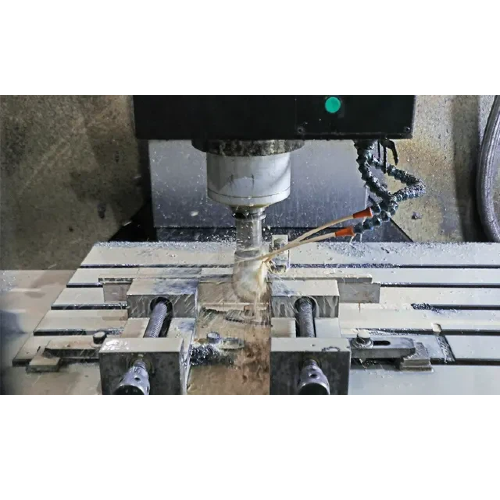
The quality of your CAD files directly impacts quoting speed. Files requiring extensive repair or conversion by the supplier's engineering team will inevitably delay your estimate.
To ensure seamless integration with modern CAM software, always export your designs in universal solid formats such as .STEP (.stp) or .X_T (Parasolid). Native CAD files from SolidWorks or Inventor are also widely accepted. Conversely, never submit .STL files. While .STL is the standard for 3D printing, it represents models as a mesh of triangles. It lacks the solid geometric data required for software to accurately calculate bend deductions.
Every fabricated component begins as a flat sheet of metal. During the initial manufacturing phase, a high-precision laser cutting service cuts the 2D profile, which is subsequently formed into a 3D shape.
Some designers attempt to provide the flat pattern (DXF) themselves. This is generally a mistake. A professional engineering team will unfold the model based on their specific shop floor tooling. They apply a precise K-factor to calculate exactly how much the metal stretches over their specific V-dies. Allowing the shop to calculate the flat pattern ensures absolute dimensional accuracy.
Design for Manufacturability (DFM) is the practice of engineering products so they are easy and cost-effective to produce. Adjusting your design before submitting an RFQ can drastically reduce the final price.
Every time a bend radius changes on a part, the machine operator must stop the equipment, remove the current tooling, and install a new punch and die. This adds significant labor costs. To optimize your design, use a uniform inside bend radius across the entire part. Ideally, this radius should be equal to or slightly greater than the material thickness.
Placing holes too close to a bend line will cause the hole to warp or stretch into an oval shape during the forming process. As a general DFM rule, the distance from the edge of a hole to the bend line should be at least two to three times the material thickness. Additionally, hole diameters should never be smaller than the thickness of the metal itself to prevent piercing punch breakage.
Facilities cut custom sheet metal parts from standard-sized raw metal sheets (e.g., 4x8 feet). Advanced software is used to "nest" these parts together to maximize yield. If your part features an awkward, sprawling geometry that creates massive amounts of unusable scrap, you will pay for that wasted material. Designing parts with rectangular or interlocking profiles allows for tighter nesting, significantly lowering your unit cost.
For procurement managers, receiving a quote is only the first step. Evaluating whether that quote is reasonable requires a fundamental understanding of manufacturing economics. A reliable sheet metal manufacturer calculates costs based on empirical data, machine capabilities, and material science.
The final price of any fabricated component is dictated by three primary factors: material consumption, machine operating time, and human labor.
Material cost is dictated by part size and scrap rates. Machine time accounts for the hourly operational cost of the laser cutters and press brakes, which increases with material thickness and geometric complexity. Finally, labor involves the human element—programming the CAM software, setting up the machines, and executing manual processes like TIG welding or deburring.
When comparing quotes from multiple vendors, look beyond the raw piece-part price. High quotes often contain hidden variables that were not explicitly managed in the RFQ. These can include non-recurring engineering (NRE) charges for custom tooling, manual secondary operations, or the cost of custom packaging to prevent transit damage. Clearly defining packaging expectations in your initial RFQ prevents unpleasant surprises.
The procurement landscape has evolved rapidly, offering buyers two distinct pathways for securing quotes. Selecting the right method depends entirely on the complexity, volume, and specific requirements of your project.
The traditional quoting process involves sending a comprehensive data package directly to a supplier's engineering team for manual review. This method is highly recommended for complex assemblies, projects requiring strict certifications, or mass production volumes. Traditional quoting allows for deep engineering consultations, robust DFM feedback, and the negotiation of custom supply chain agreements.
Alternatively, many platforms now offer automated online portals where users upload a CAD file and receive a price instantly. This is optimal for rapid prototyping and simple brackets. However, automated systems often lack the nuanced human review required to spot subtle design flaws or optimize complex multi-axis bends.
Securing a competitive quote is only half the procurement equation. Validating the capabilities and reliability of the supplier behind that quote is equally critical. A low price from an unverified vendor can quickly result in missed deadlines and costly rework.
A professional estimate should be entirely transparent. It must clearly itemize the piece-part cost separately from one-time setup fees or tooling charges. Furthermore, the quote should explicitly state the estimated lead time, the material certifications provided, and the specific tolerances they are committing to hold.
When precision and reliability are non-negotiable, partnering with an established facility ensures your project's success. By leveraging state-of-the-art technology and advanced CNC bending capabilities, top-tier partners provide highly accurate components tailored to exact specifications.
A well-prepared RFQ is the bedrock of fast and accurate pricing. By taking the time to include exact materials, tiered production volumes, and optimized STEP files, you empower your supplier to deliver their best work without unnecessary delays. Treat the quoting process as a collaborative engineering partnership rather than a transactional hurdle. Ready to transition from design to physical product? Contact the engineering team at DNC CNC Sheet Metal today with your complete data package to get your project moving forward.
The industry standard for requesting a quote is a combination of a 3D model and a 2D drawing. The optimal 3D format is a .STEP (.stp) or .IGES file. These are universal, non-proprietary formats that seamlessly import into CAM software for programming. Accompany this with a 2D .PDF drawing that explicitly calls out critical dimensions, required tolerances, thread sizes, and surface finishes. Avoid sending .STL files, as they lack the solid geometric data required for bend deduction calculations.
When a buyer submits a complete and accurate data package, most reputable manufacturing facilities can process and return a comprehensive quote within 24 to 48 hours. However, if the RFQ is missing critical information—such as material thickness, specific alloy grades, or post-processing requirements—the process will be delayed. The estimator will be forced to place the project on an "engineering hold" pending clarification.
While providing a flat pattern (.DXF) can be helpful for a simple 2D laser-cut part, it is highly discouraged for parts that require forming. Metal stretches when it is bent. Every manufacturer uses specific tooling (punches and V-dies) that dictate the bend radius and the resulting K-factor. If you provide a pre-flattened file based on generic software defaults, it will likely be incorrect for the manufacturer's specific press brake tools, resulting in parts that are out of tolerance. Always provide the folded 3D model.
Yes, order volume is one of the most critical factors in determining the per-unit cost. Manufacturing involves significant fixed setup costs. For example, programming the equipment, loading the sheet metal, and setting up the press brake dies might take one hour, equating to $100 in setup labor. If you order 5 parts, that setup cost adds $20 to the price of each part. If you order 1,000 parts, that exact same setup cost adds only $0.10 to each part.
A BOM (Bill of Materials) is a comprehensive list of all raw materials, intermediate parts, sub-components, and hardware quantities needed to manufacture an end product. For a simple, single-piece bracket, a BOM is not necessary. However, if your project is a complex assembly (e.g., an electronic chassis requiring a base, a lid, welded brackets, and inserted hardware like PEM nuts), a BOM is strictly required to ensure no components are omitted from the final quote.
To reduce costs, focus on Design for Manufacturability (DFM). Standardize your inside bend radii across the entire part so the operator doesn't have to change tooling midway. Avoid impossibly tight tolerances unless absolutely necessary for mating parts. Design your flat patterns to fit efficiently on standard sheet sizes to maximize material yield. Finally, increase your batch size to amortize fixed machine setup costs over a larger number of parts.
Standard tolerances depend heavily on the material thickness and the specific equipment used. Generally, a reputable precision sheet metal fabricator can hold linear dimensions to ±0.1mm to ±0.2mm, and bend angles to ±1 degree. Laser cutting profiles can typically be held tighter, often around ±0.05mm to ±0.1mm. Always specify if a particular dimension requires a tighter tolerance, but be aware that exceeding standard tolerances will increase the manufacturing cost.


